
Astronomy Picture of the Day ·
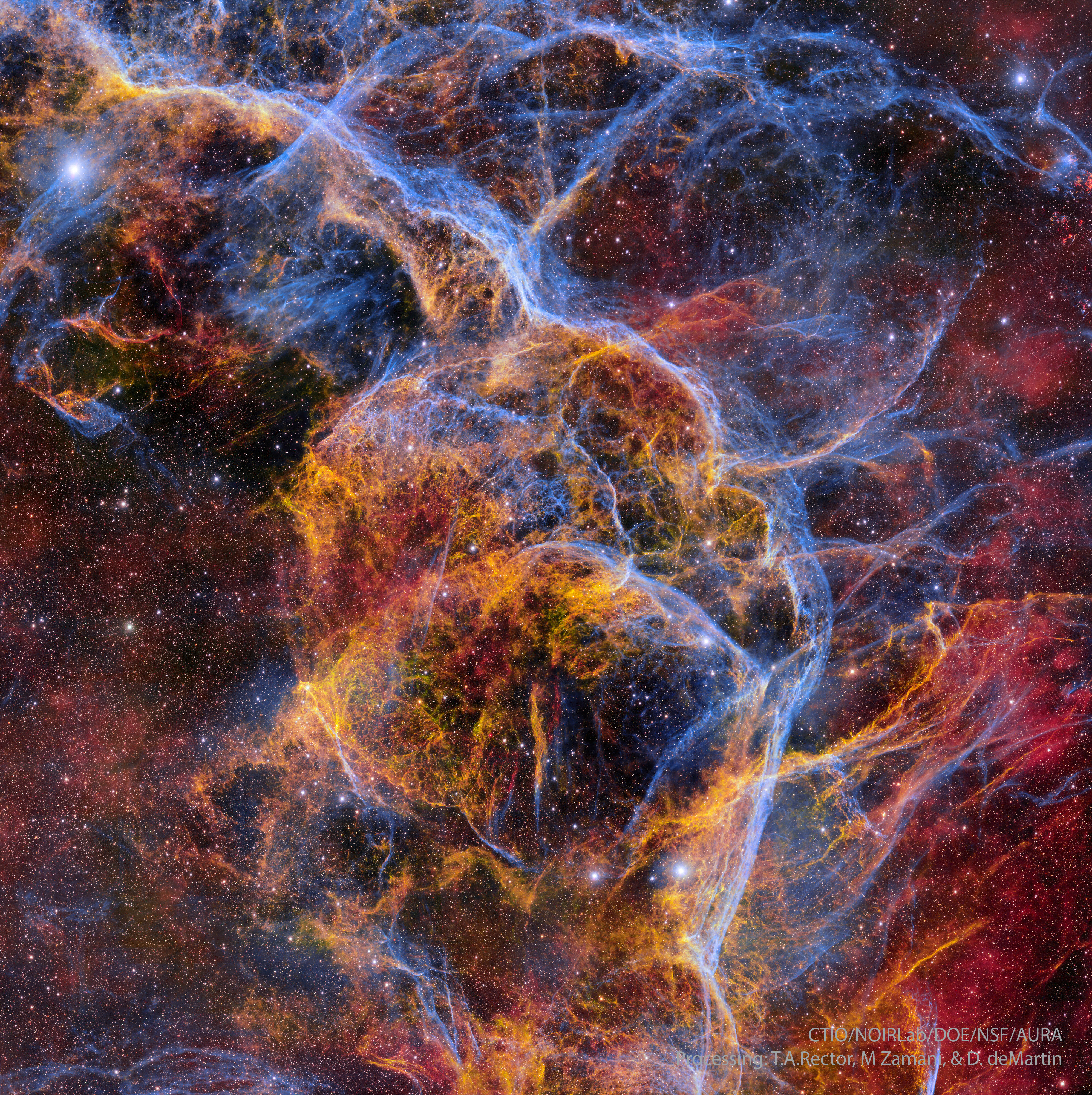
Filaments of the Vela Supernova Remnant
The Astronomy Picture of the Day for April 16, 2024 is “Filaments of the Vela Supernova Remnant,” an image. It is credited to Image Credit: CTIO , NOIRLab , DOE , NSF , AURA ; Processing: T. A. Rector ( U. Alaska Anchorage ), M. Zamani & D. de Martin ( <a a='“"' href="https://www.nsf.gov/" nsf's NOIRLab). The original explanation runs about 143 words.
From the explanation
“The explosion is over, but the consequences continue. About eleven thousand years ago, a star in the constellation of Vela could be seen to explode , creating a strange point of light briefly visible to humans living near the beginning of recorded history .”
— APOD editors, April 16, 2024
Read the full explanation on science.nasa.gov
Advertisement
At a glance
- Date
- April 16, 2024
- Type
- Image
- Credit
- Credit: Image Credit: CTIO , NOIRLab , DOE , NSF , AURA ; Processing: T. A. Rector ( U. Alaska Anchorage ), M. Zamani & D. de Martin ( <a a='“"' href="https://www.nsf.gov/" nsf's NOIRLab)
- Copyright
- No copyright notice on the entry. Check the credited institution’s own usage rules before reusing it.
- Explanation length
- About 143 words